THE FACE
Five colours, ten rings
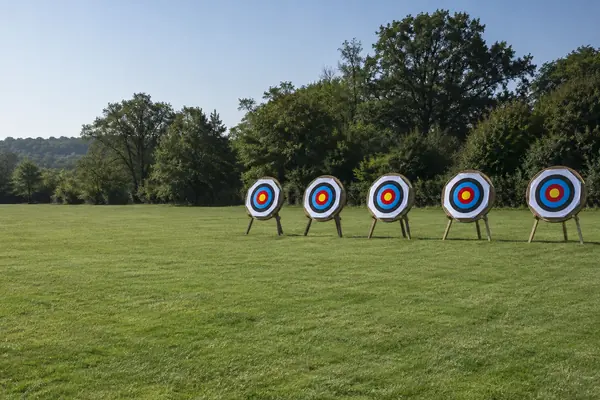
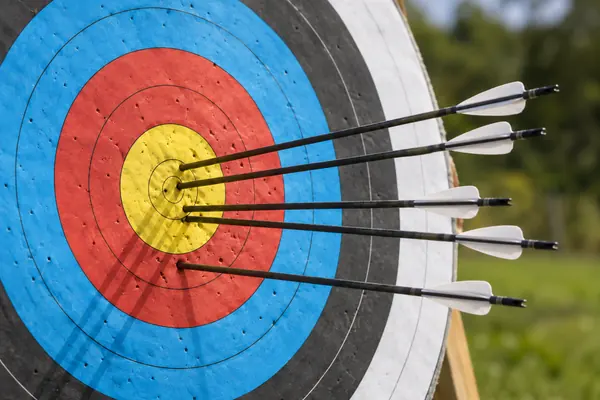
From the outside in: white, black, blue, red and gold. Each colour holds two rings, scoring 1 and 2 up to 9 and 10. Missing the target scores zero.
Score an arrow doodletarget
00HOW ARCHERY IS SCORED
Every archery target is a scoring chart.
The familiar target has ten rings in five colours, each colour split into two scores. Learn the colours and you can follow any match, from a club evening to the Olympic final at 70 metres.
Score an arrow01Principles
02THE SHORT ANSWER
Ten concentric rings score from 1 to 10.
Each pair of rings shares one colour.
THE FACE
From the outside in: white, black, blue, red and gold. Each colour holds two rings, scoring 1 and 2 up to 9 and 10. Missing the target scores zero.
Score an arrowTHE DISTANCE
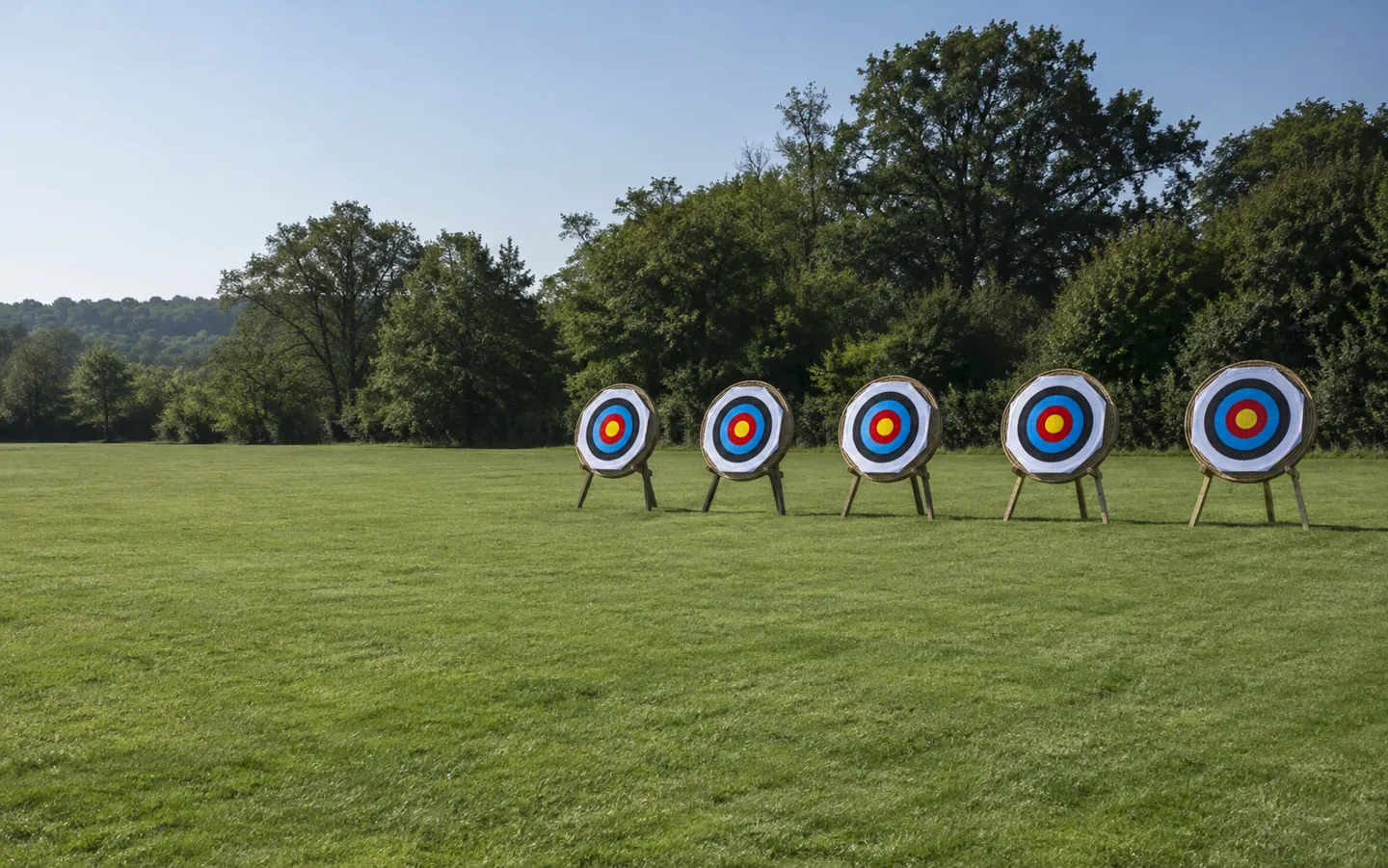
Recurve archers shoot at a 122 cm face from 70 metres. Its 10-ring is just 12.2 cm across. Compound archers shoot 50 metres at an 80 cm face.
See the numbersTHE MATCH
Recurve matches use a set system: win a three-arrow set for 2 points, draw for 1, and the first to 6 set points wins.
How a match works03SCORE AN ARROW
Pick the colour an arrow landed in to see what it is worth. The bar shows how close to the centre it is.
Standard 10-zone scoring under World Archery rules. An arrow touching a line between two rings scores the higher value.
04TWO NUMBERS WORTH KNOWING
From World Archery's rules for outdoor
recurve target archery, as used at the Olympics.
12.2 cm
Width of the 10-ring at 70 metres
The recurve target face is 122 cm across, and its 10-ring is a tenth of that: 12.2 cm, shot at from 70 metres.
THE 10-RING · RECURVE
72
Arrows each archer shoots to qualify
In international target archery, each archer shoots 72 arrows in the qualification round. Total scores set the seedings for the head-to-head matches.
QUALIFICATION · WORLD ARCHERY
Indoors, archers shoot at 18 metres at 40 cm faces, usually three small spots so they do not damage their own arrows. World Archery was founded in 1931, and archery has been on the Olympic programme since 1972.
05HOW A MATCH IS WON
After qualification, archers meet head to head. The two main bow types decide matches differently.
Each set is three arrows. Win it for 2 set points, draw for 1. The first archer to 6 set points wins the match.
Compound matches are 15 arrows, and the highest total score wins, rewarding steady precision.
If an individual match is still level, each archer shoots one arrow and the one closest to the centre wins.
On a score sheet, each end's arrow values are recorded in descending order, and nobody touches the arrows until they are scored.
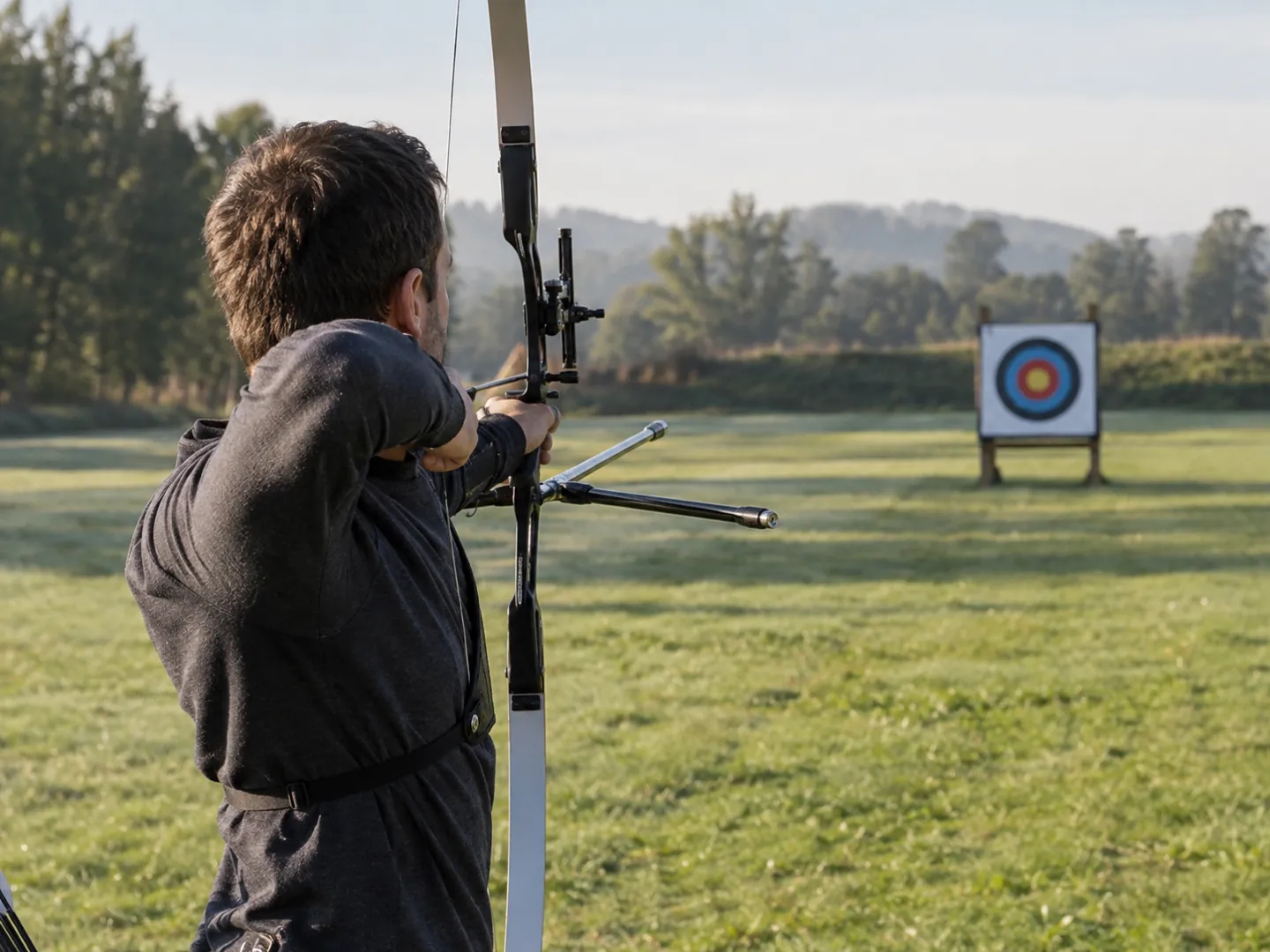
06SCORING DETAILS
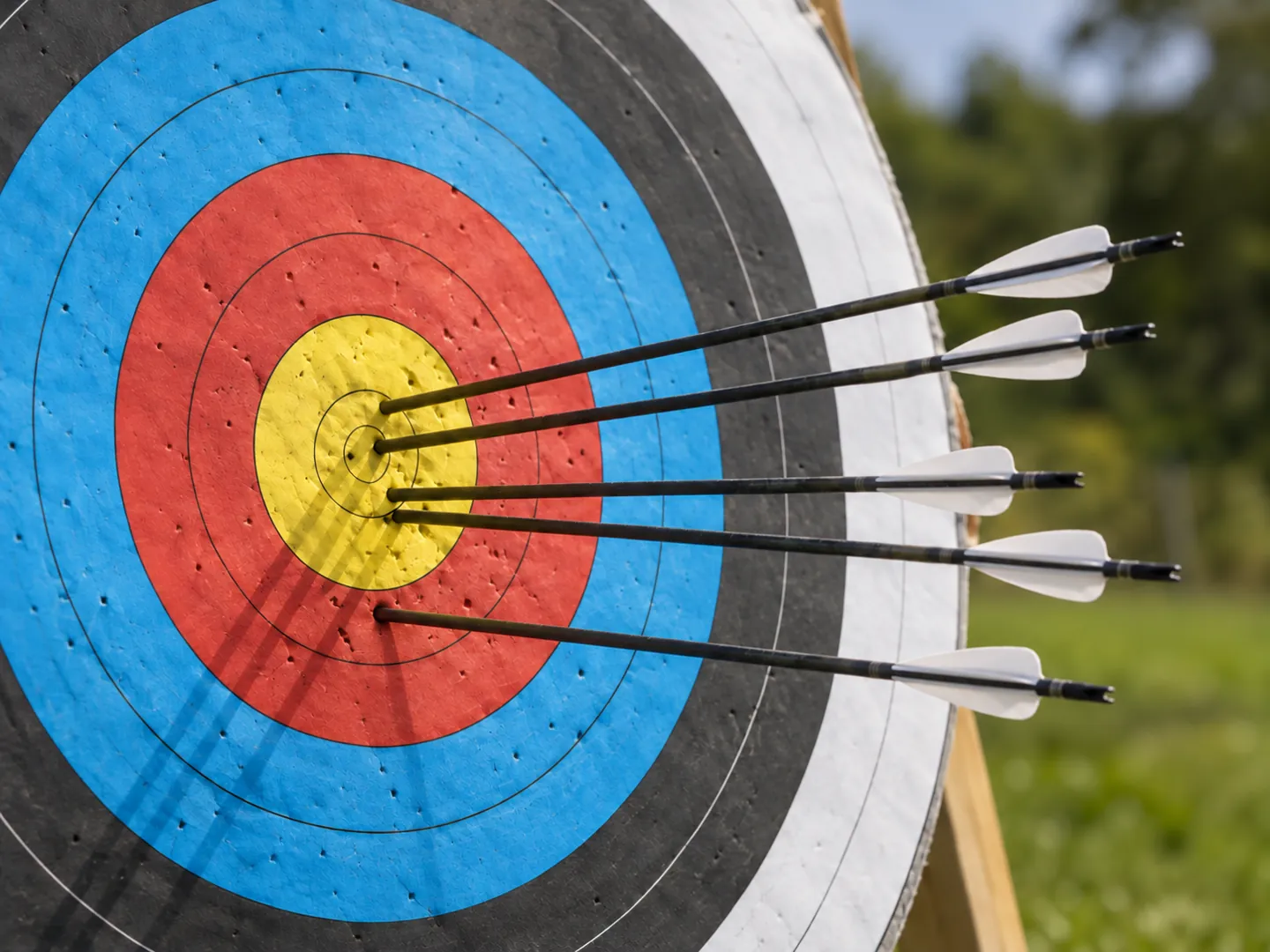
An arrow just touching a boundary line between two rings, called a line cutter or line breaker, is given the higher score. Inside the 10 there is an inner ring, the X: outdoors it decides ties, with the archer who has more X's winning.
Older British Imperial rounds score differently. They use five zones, one per colour: 9 for gold, 7 for red, 5 for blue, 3 for black and 1 for white, with arrows shot at 100, 80 and 60 yards in a York round.
07Questions
Each colour marks two scoring rings, and the closer to the centre, the higher the score. From the centre out, gold (yellow) scores 10 and 9, red 8 and 7, blue 6 and 5, black 4 and 3, and white 2 and 1. Missing the target scores zero. This is the standard 10-zone scoring used under World Archery rules.
The innermost gold ring scores 10. In standard 10-zone scoring the rings score from 10 in the centre down to 1 on the outer white ring.
An arrow touching the boundary between two rings is given the higher score. It is often called a line cutter or line breaker.
An inner ring inside the 10. In outdoor competition it counts as a 10 but breaks ties: the archer with the most X's wins. At indoor compound events it becomes the 10 ring.
70 metres, at a 122 cm target face with a 12.2 cm 10-ring. Only recurve bows are used at the Olympics.
Outdoors, recurve archers shoot from 70 metres at a 122 cm face with a 12.2 cm 10-ring. Compound archers shoot from 50 metres at an 80 cm face with an 8 cm 10-ring, usually with the outer four rings removed. Barebow archers shoot from 50 metres at the full 122 cm face. Indoors, all three usually shoot from 18 metres at 40 cm faces: the 10-ring is 4 cm for recurve and barebow but 2 cm for compound, and barebow archers use a single full face rather than three spots.
Indoor archers shoot at 18 metres at 40 cm faces. Using three separate spots stops archers damaging their own arrows by hitting them.
A 5-spot is the blue and white indoor face used in the NFAA 300 round in the US, not the five-colour World Archery face. Each of its five spots has a white centre ring worth 5, 8 cm across with a 4 cm X-ring inside it, and two blue rings that both score 4. Archers shoot 60 arrows in 12 ends of five, usually from 20 yards, so a perfect round is 300. X's are counted to break ties, and an arrow touching a line takes the higher value.
Four checks help. Size: match the face to the distance you shoot, such as 122 cm for recurve at 70 metres, 80 cm for compound at 50 metres or 40 cm for indoor archery at 18 metres. Layout: indoors, recurve and compound archers usually shoot at three-spot faces, while barebow archers use a single full face. Compound rings: outdoor compound faces usually drop the outer four rings, and indoor compound scoring uses the smaller inner 10-ring. Scoring system: World Archery faces use five colours and ten rings, while a US 5-spot face is blue and white and scores only 5 and 4.
08Sources
ABOUT THIS NAME
doodletarget.com is part of the DoodleSale portfolio. It isn't in an auction right now, but you can ask about leasing it.